95% Zirconium Beads, Grinding Media

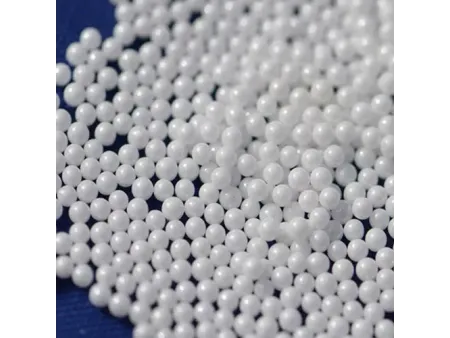
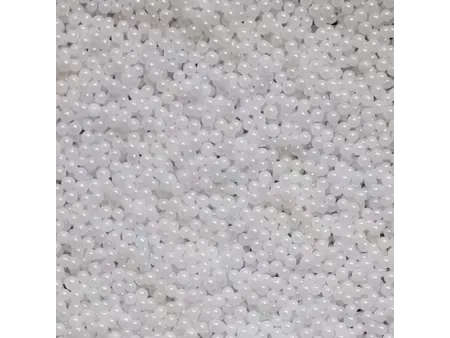
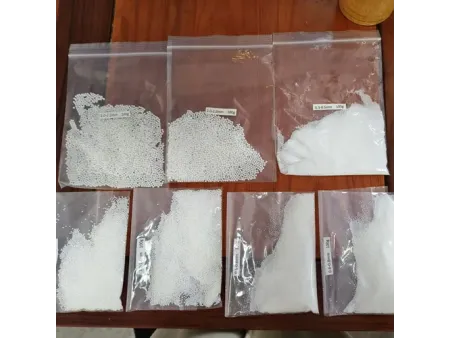

95% zirconia beads are high-density ceramic grinding media used in wet grinding and dispersion processes. During milling, the beads are driven through the material inside the grinding chamber. As they collide with the particles and rub against each other, they help break down agglomerates, reduce particle size, and make the dispersion more uniform. Their high zirconia content gives these beads good hardness, wear resistance, and chemical stability, so they can be used in fine grinding processes that require low contamination, stable performance, and long service life. Different bead sizes can be selected according to the required fineness, material viscosity, and bead mill configuration.
| Chemical Composition | Content | Physical Property | Parameter |
| ZrO₂ (Hf02) | 94-96% | Density | 6.0–6.1 g/cm³ |
| Bulk Density | 3.7 g/cm³, for 1.8–2.0 mm beads | ||
| Compressive Strength | > 2.0 kN, for 2 mm beads | ||
| Vickers Hardness | > 1250 HV | ||
| Self-Wear Rate | < 2 ppm | ||
| Fracture Toughness | 8.0 MPa·m¹/² |
Widely used as grinding media in wet grinding and dispersion processes for liquid, slurry, paste-like, and powder-liquid formulations that require fine particle reduction, stable dispersion, and low contamination.
- Paints and Coatings
- Leather Coatings
- Inks
- Pesticides and Fertilizers
- Viscous Materials
- Cosmetics
- Chemicals
- New Materials
- Thanks to their density above 6.0 g/cm³, 95% zirconia beads deliver stronger grinding force during milling and can improve efficiency compared with lower-density media such as glass beads and zirconium silicate beads.
- Their wear resistance is much higher than that of glass beads and zirconium silicate beads, helping extend service life and reduce media consumption during long-term grinding.
- Strong chemical inertness reduces the risk of reaction with processed materials, which makes these beads suitable for applications that require low contamination, including pharmaceutical, food, and cosmetic formulations.
- Yttria-stabilized zirconia gives the beads good toughness and impact resistance, reducing the risk of cracking or peeling during high-speed milling.
- High hardness, with Mohs hardness around 9 and Vickers hardness ≥ 1200 HV, allows the beads to process harder materials while maintaining stable grinding performance.
- A low friction coefficient helps reduce wear on internal bead mill components, including dispersing discs and chamber liners.
These zirconia beads, also known as yttria-stabilized zirconia beads, are made from fine zirconia and yttrium oxide raw materials through high-temperature sintering. The zirconia content is around 95%, while yttrium oxide works as a stabilizer to improve toughness and grinding stability. The finished beads have a smooth surface, good roundness, and a pearl-like appearance.
In pigment and ink grinding, consistent bead quality helps support better dispersion results. When used with proper mill cooling and suitable process settings, 95% zirconia beads can help improve color strength and transparency compared with lower-quality or inconsistent grinding media.
Zirconia beads have good spherical roundness, with a roundness rate above 96%. A smoother, more regular bead shape helps the media move evenly during grinding and reduces unnecessary wear.
Available bead sizes range from 0.05 mm to 50 mm, covering different process needs from nanoscale ultrafine grinding to coarser grinding applications.
Good corrosion resistance helps the beads remain stable when used with many chemical liquids, including acidic and alkaline media, reducing the risk of reaction with the processed material during grinding.