Plastic Pelletizing Machines

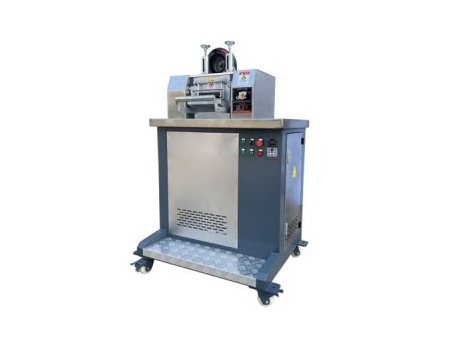
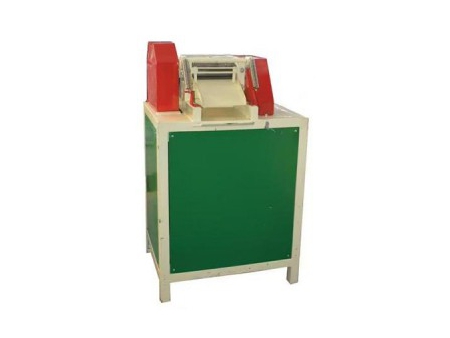
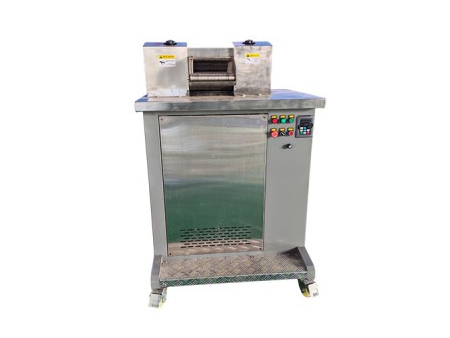

Plastic pelletizing machines are used after extrusion to cut molten plastic into finished pellets. Different cutting and cooling methods are available to match material type, output requirements, and pellet appearance. The strand pelletizer produces uniform cylindrical pellets by cutting cooled plastic strands. It is widely used for a variety of materials, including PP, PE, PA, PS, ABS, and PC to produce consistent pellet size.
Specifications
| Model | Rotary Cutter Length (mm) | Power (kW) | Output Capacity (kg/h) |
| 180 | 1.6 | 150-200 | |
| 200 | 2.2 | 200-300 | |
| 220 | 3 | 300-400 | |
| 240 | 4 | 400-500 | |
| 240 | 4 | 400-500 | |
| 240 | 4 | 400-500 | |
| 260 | 5.5 | 600-800 | |
| 260 | 7.5 | 800-1000 |
The water ring pelletizer is equipped with high cooling efficiency. The molten plastic is cut at the die face and cooled by circulating water immediately, forming a regular, semi-spherical shape. This system is ideal for materials such as PE, EVA, and TPU.
Specifications
| Model | Power (kW) | Output Capacity (kg/h) |
| 1.5 | 400 | |
| 2.2 | 800 | |
| 5.5 | 1000 |
Underwater pelletizing works in a similar way to water ring cutting, but both the die face and cutting knives operate fully under water. The melt is cut the moment it exits the die, allowing for very fast cooling. The pellets are smooth, rounded, and free from sticking. This underwater pelletizing system is suitable for materials such as PP, PE, TPU, and EVA.
Specifications
| Model | Power (kW) | Output Capacity (kg/h) |
| HS-1500 | Cutter motor: 7.5 Water pump motor: 5.5 Dewatering motor: 11 | 1500-2000 |