Welding Robot


Request a Quote
Industrial Robot Manufacturer
- Types
- Samples
- Components
- Features
- Working Flow
Robotic welding machine
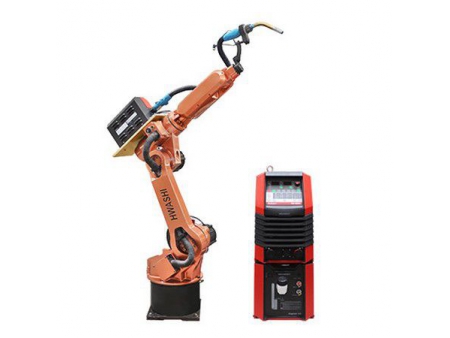
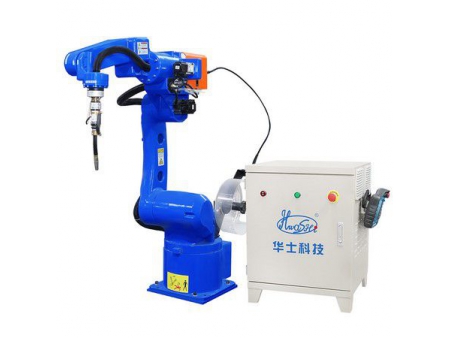
Welding robot is welding automation that utilizes a welding robot arm to weld, composed of a 6-axis robotic arm and welding system. The 6-axis robotic arm offers a wide range of motion and can be installed at various angles, improving the flexibility of the system. The robotic arm can be equipped with different types of welding guns and can be seamlessly integrated with various welding power sources from different brands. This versatility enables the system to meet diverse welding requirements and perform multiple welding processes effectively.
Types of Welding Robot
- Robotic welder (robotic aluminum welding)
For welding aluminum plates and aluminum products
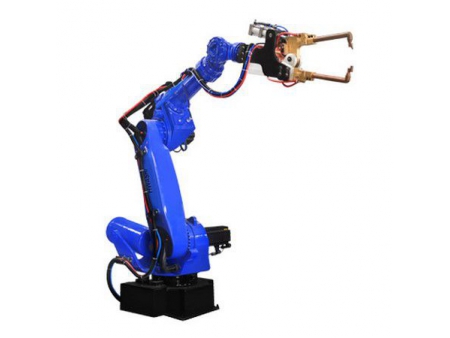
- Spot welding robot
For resistance spot welding of sheet metal
- Arc welding robot (robotic MIG welding)
For welding carbon steel, stainless steel, and galvanized steel materials
Welding Samples
- Automobile Angle Adjuster Welding
- Automobile Oil Drum Welding
- Sheet Metal Cabinet Welding
- Stainless Steel Manhole Cover Welding
- Inflatable Cabinet Welding
- Motorcycle Frame Welding
- Engineering Scaffold Welding
- Coffee Table Welding
- Metal Trash Can Welding
- Automobile Exhaust Pipe Welding
- Chair Frame Welding
- Storage Rack Welding
Appearance of Welds
Components of Welding Robot
- Robot arm teach pendant control cabinet
- Welder and welding torch
- Single-axis positioner with horizontal rotational axis, vertical rotation positioner, dual-axis positioner, three-axis positioner
- Slide rail
- Torch tip cleaner
- Anti-collision device
- Weld seam tracking (weld joint tracking) device (to be installed in case of large product errors)
- Inverted mounting device
- Safety fence
Compatible Welding Power Source
| Welder Type | Brand |
| MIG Welding Machine | OTC, Panasonic, BINGO, AOTAI |
| TIG Welding Machine | Panasonic, BINGO, AOTAI |
| Laser Welding Machine | MAX, Raycus |
Features
- Improved production efficiency
The welding speed of the robot is between 60-120cm/min, far higher than manual welding at 40-60cm/min. - Improved welding quality
Once the welding parameters and motion trajectory are set, the robot will accurately repeat the action. The welding current, voltage, welding speed, and welding wire extension length have a decisive impact on the welding results, thereby ensuring the quality of the products. - Reduced costs
One welding robot can replace 2-4 industrial workers, depending on the specific circumstances of the company. Robots do not experience fatigue and can operate continuously for 24 hours a day, maximizing productivity. - Easy production planning arrangement
Due to the high repeatability of welding robots, once the parameters are set, they will consistently follow instructions. This ensures a clear and predictable welding cycle for robot-welded products, making it easy to manage and control product output.
Welding Robot Working Flow
- Placement of workpiece in fixture
- Click Start switch
- Robot welding according to program
- Double sets positioner, cycle working
- Manual unloading of products after welding
- Robot works between the positioners
Welding Robot at Work Site