Rubber Vibration Isolators & Mounts

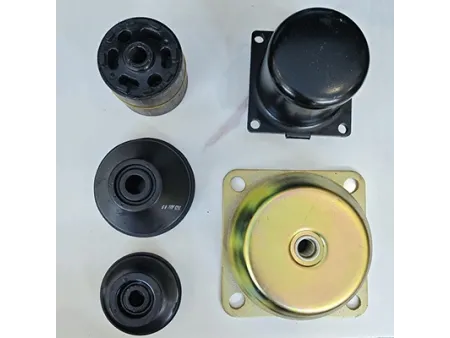
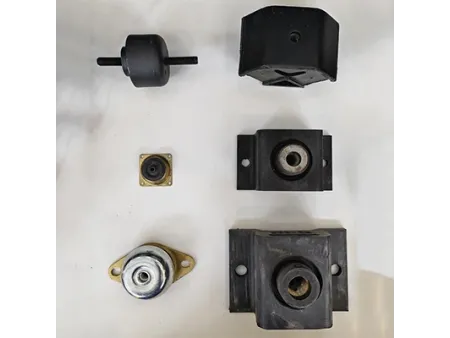
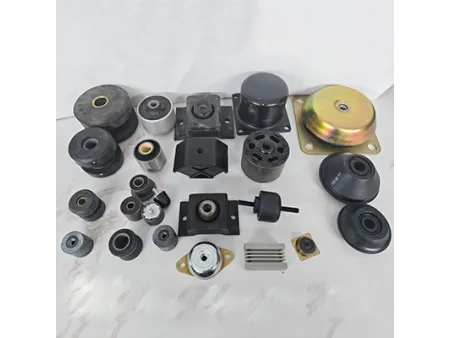

Rubber vibration damping products for reducing noise and vibration in automotive, industrial and precision equipment applications
Saiensi specializes in the research, development, and manufacturing of rubber vibration isolators and mounts. With proprietary high-performance rubber formulations and advanced rubber-metal composite vulcanization processes, the company offers customized elastic modulus, damping coefficient, and stiffness designs to meet diverse operational requirements. The main product types include anti-vibration mounts, anti-vibration mounts for generators, two-piece vibration isolators, cylindrical vibration isolators made from materials such as natural rubber (NR) and nitrile rubber (NBR), with an operating temperature range of -40°C to 200°C. These products are widely applied in industrial equipment, automotive chassis, precision instruments, and construction, effectively extending equipment lifespan and enhancing operational stability.
- Advanced material technology: Utilizing proprietary high-performance rubber formulations, including oil-resistant NBR and weather-resistant EPDM. Elastic modulus can be customized from 30 to 80 Shore A, damping coefficient improved by 20%, suitable for extreme environments from -50°C to 180°C.
- Innovative structural design: Combining metal-rubber composite vulcanization, product fatigue life exceeds 5 million cycles, vibration transmission rate below 15%, surpassing industry standards such as ISO 10846.
- Application-specific solutions: Covering automotive (bushings and vibration parts), rail transit (switch cushions), industrial equipment (textile machine isolators), with dynamic load analysis and custom development services.
| Material | Features | Advantages | Applications |
| Natural Rubber (NR) | Elastic modulus 1.5–2.5MPa, Temperature range -40°C~70°C, Loss factor tanδ 0.15–0.25 | High elasticity, strong fatigue resistance, Compression set ≤25% | Vibration mounts, suspension bushings, precision instrument isolation |
| Nitrile Rubber (NBR) | Hardness 40–90 Shore A, Temperature -20°C~100°C, oil resistance | 30% improved wear resistance, strong dynamic load adaptability | Fuel equipment vibration damping, hydraulic system seals |
| EPDM (EPDM) | Temperature -50°C~150°C, ozone/weather resistance, tanδ peak 0.08–0.12 | Anti-aging retention > 85%, stable across wide temperature range | Rail transit switch pads, outdoor construction supports |
| Butyl Rubber (IIR) | tanδ>0.4 (-30~80°C), airtightness, Temperature -35°C~130°C | Optimal damping, fatigue life >5 million cycles | High-speed rail vibration pads, body sealing elements |
| Chloroprene Rubber (CR) | Flame retardant, Temperature -30°C~130°C, Acid/alkali resistance | Ozone aging resistance, adjustable dynamic stiffness | Marine engine mounts, fire-fighting equipment |
| Polyurethane (PU) | Hardness 60A–75D, Temperature -40°C~120°C, 50% improved wear resistance | High load capacity (>3000kg), high-frequency vibration suppression | Heavy machinery bases, stamping machine isolation |
| Hydrogenated Nitrile (HNBR) | Temperature -40°C~180°C, oil resistance, High tear strength | Extreme environment adaptability, low permanent compression set | Engine mounts, high-temperature pump/valve damping |
What role do rubber vibration isolators play in industrial applications?
Rubber vibration isolators use the elastic properties of rubber to reduce mechanical vibration, shock, and noise. They absorb and reflect vibration energy, preventing the propagation of vibration waves, thereby achieving damping, noise reduction, and minimizing impact-related damage.