Ceramic Liners for Cyclone & Hydrocyclone

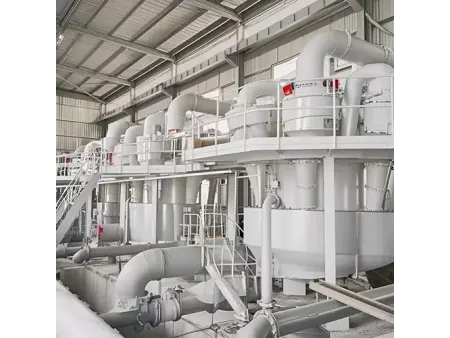
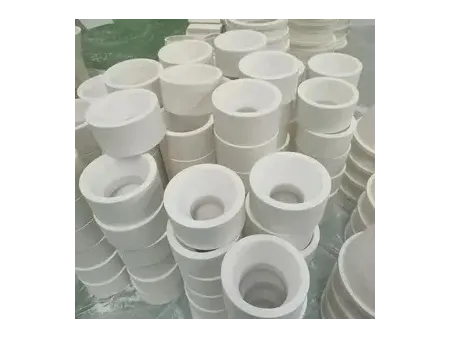
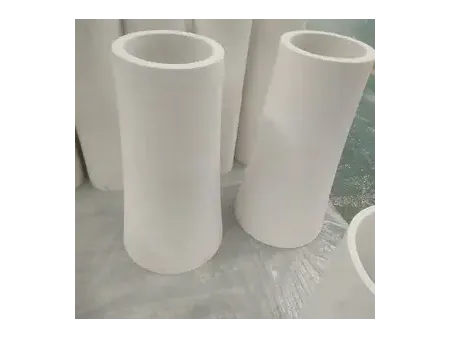

Ceramic cyclones for mining play a critical role in mineral processing, primarily through efficient classification, slime removing, and dewatering.
The alumina ceramic liners are integrally formed using advanced alumina ceramic isostatic pressing technology and are suitable for cyclones with diameters up to 350 mm.
Compared with conventional ceramic tile linings, this monolithic liner design offers longer service life and improved separation performance, helping increase ore processing efficiency and enhance concentrate quality.
Application Cases
In 2023, a lead-zinc ore beneficiation plant experienced uneven particle size distribution after grinding, which negatively affected recovery rates. To improve beneficiation efficiency, a 350mm hydrocyclone was introduced for classification, with a slurry handling capacity of 50-80m³/h. The cyclone utilized centrifugal force to efficiently separate coarse and fine particles: coarse particles were returned to the grinding mill for regrinding, while fine particles proceeded to subsequent flotation processes. Operational results showed that the hydrocyclone significantly improved classification performance, reduced both overgrinding and undergrinding, increased concentrate grade, and improved recovery by 5-8%. In addition, grinding energy consumption was reduced, delivering substantial economic benefits.
In 2024, an offshore oil production platform faced high water content in produced crude oil, which severely affected crude quality and downstream processing. To address this issue, an oil-water cyclone was installed in the crude oil pre-treatment stage.
The oil-water cyclone features a compact design and operates on centrifugal separation. When crude oil with high water content enters the cyclone at a certain pressure, the high-speed rotational flow generates strong centrifugal force. The higher-density water phase is driven toward the cyclone wall and discharged downward along the wall, while the lower-density oil phase forms an inner vortex at the center and exits through the overflow outlet.
After installation, the water content of crude oil was reduced from 50-70% to below 10%, significantly alleviating the load on downstream dehydration equipment and processing units. This improvement enhanced overall processing efficiency, reduced operating costs, and improved crude oil quality, meeting market demand for higher-quality crude oil products.